Incorporating courtyards into homes
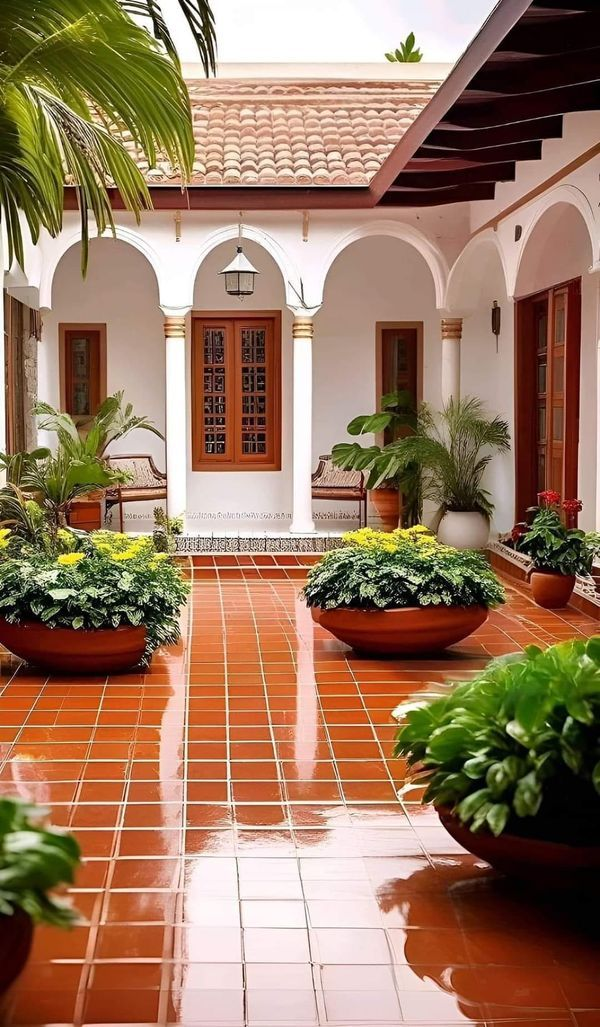
The courtyard holds a cherished place in Indian architecture, embodying a design philosophy that harmoniously blends functionality, aesthetics, and cultural significance. A courtyard is an open or partially covered space, typically at the center of a house, allowing direct sunlight and serving as a versatile area for various activities like socializing, rainwater harvesting, cooking, and sleeping. Commonly seen in Indian villages, courtyards provide an outdoor-like experience within the home. Over time, this classic architectural feature has evolved with modern design innovations, adapting to contemporary needs while retaining its functional charm.
The origin
Courtyards in Indian homes date back to around 6500 BC, with examples seen across diverse regions and cultures, from the Nalukettu in Kerala to the havelis of Rajasthan and the wadas of Maharashtra. This central open space served as the heart of the home, fostering a connection to nature while accommodating family activities like weddings, rituals, and daily gatherings. Courtyards are not unique to Indian culture; they have been a cornerstone of architectural traditions worldwide. In Roman homes, atriums were used for gardening and water collection, while Chinese courtyards were designed for meditation and family gatherings. Despite regional variations, the universal appeal of courtyards lies in their ability to bring nature, light, and community into the heart of a home.
Courtyards were particularly suited to the warm climates of regions like India, Iran, and Egypt. Their spatial arrangement allowed for thermal regulation, enhanced ventilation, and abundant natural light, making them a practical solution for climatic comfort.
Functionality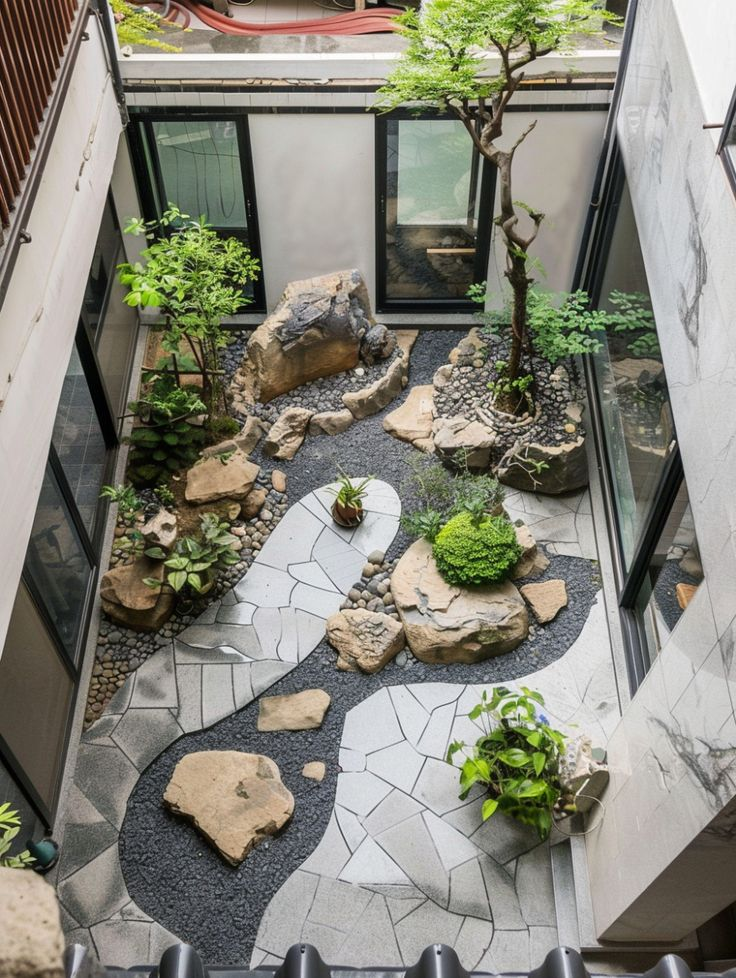
In Indian homes, courtyards served dual purposes: functional and cultural. Functionally, they facilitated natural ventilation, reducing indoor temperatures by as much as 4°C, and allowed for rainwater collection, gardening, or even the installation of water pools that further cooled the surrounding spaces. Culturally, they became the focal point for family life, fostering a sense of community in joint families and providing a space for shared activities. The courtyard became a space where generations connected, fostering a sense of community and shared identity. Whether it’s children playing, elders relaxing, or family festivals being celebrated, the courtyard serves as a vibrant focal point of life in the home.
Courtyards also reflected the socio-economic realities of their times. Materials like laterite stone, mud plastering, and wooden rafters were chosen for their affordability, sustainability, and thermal properties, showcasing the ingenuity of traditional Indian builders.
Present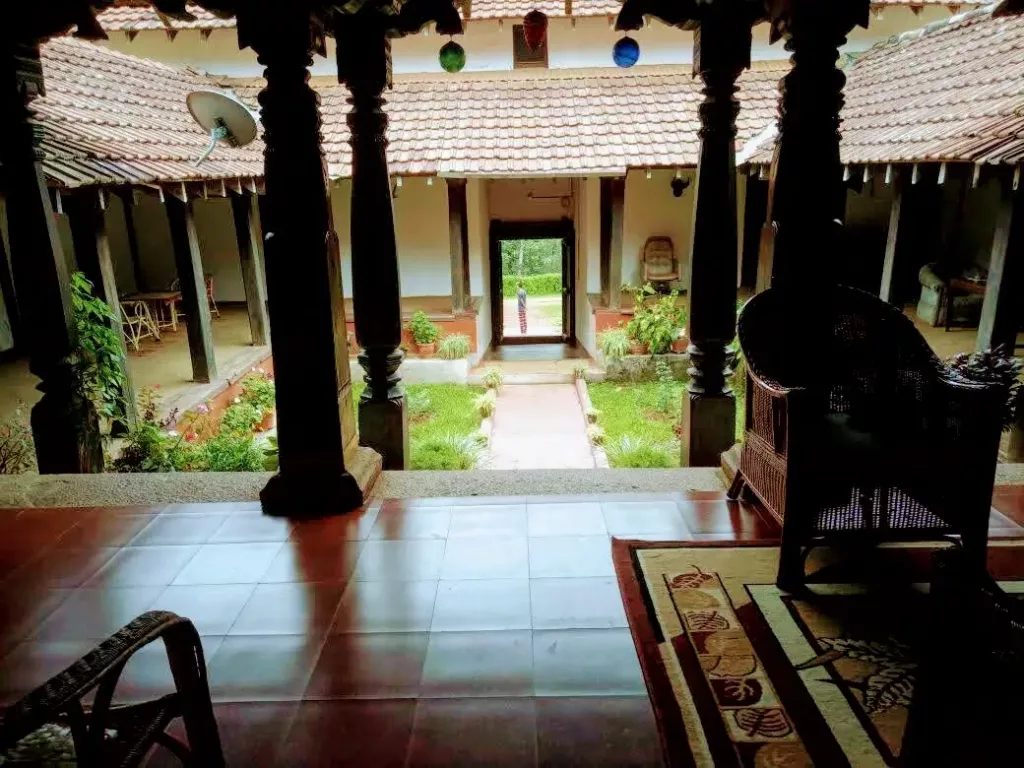
While the rise of urbanization and shrinking plots has posed challenges to courtyard designs, architects today are reinterpreting this timeless concept for contemporary homes. Modern courtyard houses in India often feature smaller internal courtyards, vertical gardens, or landscaped terraces, allowing even compact spaces to enjoy the benefits of natural light, ventilation, and greenery.
Materials and designs have also evolved. Contemporary homes integrate courtyards with glass facades, steel accents, or modern landscaping, creating a seamless blend of traditional functionality and modern aesthetics. These spaces now cater to diverse lifestyles, serving as tranquil retreats, social hubs, or even functional extensions of living areas.
As cities become more crowded and homes more compact, the courtyard’s principles remain relevant. Open balconies, large windows, or even terrace gardens can recreate the spirit of courtyards in modern urban homes. These adaptations prove that while the scale and form of courtyards may have changed, their essence endures as a reminder of the timeless connection between architecture and well-being.
Future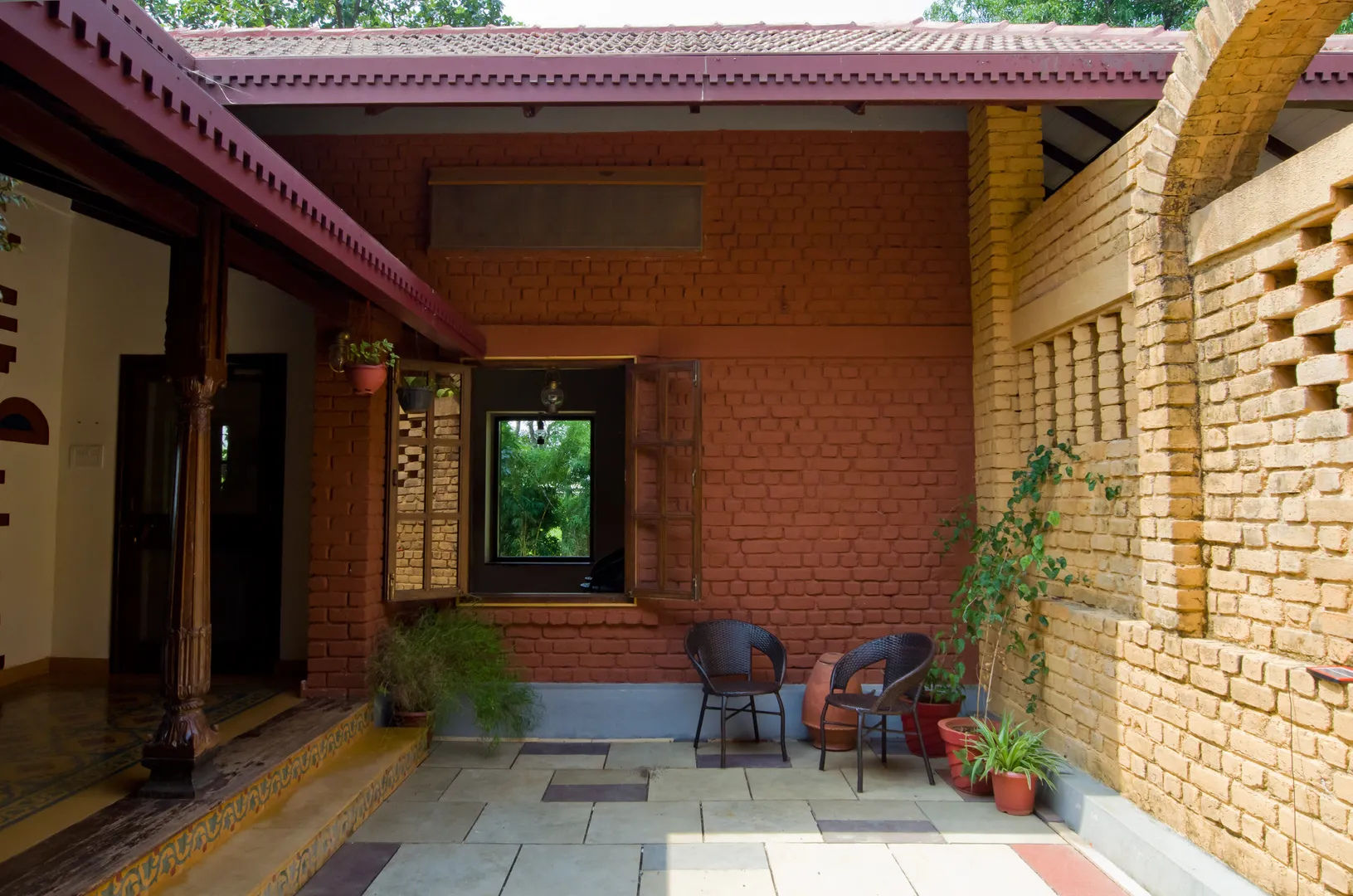 The courtyard remains a symbol of India’s rich architectural heritage, showcasing a balance of practicality and cultural depth. Courtyards, whether traditional or modern, continue to inspire architects and homeowners alike, bridging the gap between the past and the present. By weaving natural elements into our living spaces, they enrich our homes, elevate our lifestyles, and root us in the enduring legacy of thoughtful, people-centered design. Its ability to adapt to changing lifestyles and spatial constraints while preserving its core benefits underscores its timeless relevance. Whether in traditional havelis or modern urban homes, courtyards continue to embody the heart of Indian architecture—bringing nature, light, and people together in harmony.